


UK ETA for Flights to the UK 2026:
Ryanair, easyJet, British Airways & All Airlines — What Happens Without It
Yes — you need a UK ETA before check-in opens, regardless of which airline you fly with. The ETA requirement applies to the traveller, not the carrier. It makes no difference whether you fly Ryanair, easyJet, British Airways, Wizz Air, TUI, Delta, Air Canada, or any other airline: if your nationality is among the 85 eligible countries (all EU member states, the US, Canada, Australia, Japan, South Korea and more), you must hold an approved UK ETA before the airline checks you in. Flying without one means denied boarding — and the consequences are severe: your ticket will not be refunded, you are not entitled to EU261 compensation, your travel insurance almost certainly will not pay out, and you could lose hundreds or thousands of euros in non-recoverable costs. The UK government fee is £20 per person. Via application-eta.uk: from €69 (Standard, 48–72h) to €169 (Dedicated Agent, ~12h) for flights departing this week. Apply now — takes under 10 minutes ➤
- How airlines check your UK ETA — the Timatic system explained
- UK ETA and major airlines: Ryanair, easyJet, British Airways, Wizz Air & more
- UK airports: what to expect on arrival
- What actually happens without a UK ETA — the denied boarding reality
- The real financial cost of being denied boarding
- EU261, US DOT, Canada APPR — your legal rights (and their limits)
- Transit passengers: a different set of rules
- How to apply for your UK ETA before your flight
- Frequently asked questions
1. How Airlines Check Your UK ETA — the Timatic System Explained
Every airline operating flights to the United Kingdom — from budget carriers like Ryanair and easyJet to full-service carriers like British Airways and Emirates — uses the same underlying travel document verification system: SITA/IATA Timatic. Understanding how this system works explains precisely why there is no flexibility, no workaround, and no way to talk yourself past a missing UK ETA at an airport check-in desk.
What Timatic is
Timatic (Travel Information Manual Automatic) is a real-time database maintained by IATA (the International Air Transport Association) that contains the entry requirements for every country in the world, updated continuously as governments change their rules. Every airline integrates Timatic into their check-in system — both online and at the airport counter. When you enter your passport details at check-in, the system queries Timatic with your nationality, destination, and travel document type and receives an immediate pass or fail instruction.
When and how airlines check your UK ETA
The first check happens the moment you attempt online check-in — typically 1 to 30 days before your flight depending on the airline. If your UK ETA is not approved in the UKVI system at that moment, online check-in will be blocked or your boarding pass withheld. The same check repeats at the physical check-in desk and again at the departure gate. By the time you reach the gate, the decision is final — there is no authority figure at the airport who can override a Timatic instruction.
A common misconception is that a sympathetic airline employee can make an exception or manually override an ETA check. They cannot. The Timatic system gives a mandatory instruction — board or do not board — and the agent is legally required to follow it. Airlines face fines of up to £10,000 per passenger under Schedule 7 of the Immigration Act 1999 for transporting individuals without valid travel authorisation to the UK. No agent will risk their employer a five-figure penalty for a passenger who arrived without the correct documentation.
Why carriers check so thoroughly
The carrier liability regime under UK immigration law is direct and unambiguous. Under the Immigration and Asylum Act 1999, Schedule 7, airlines and other carriers that transport non-EEA nationals to the United Kingdom without the required documentation — including a UK ETA — are liable for civil penalties of up to £10,000 per passenger. Carriers are also responsible for the cost of returning the passenger to their origin country. This financial exposure is what drives the rigorous, automated, no-exceptions verification that every airline applies from the moment check-in opens.
What “ETA approved” means at check-in
Your UK ETA is linked electronically to your passport number. When the airline scans or manually enters your passport number at check-in, the UKVI (UK Visas and Immigration) database returns one of four statuses — Approved, Pending, Under Review, or Refused. Only Approved clears you for boarding. Pending, Under Review, and Refused all result in the same outcome: you are not permitted to board that flight.
Use our UK ETA status check tool 24 to 48 hours before your flight — not the morning of departure. Enter your passport number, nationality, expiry date, and date of birth to see your live UKVI status. If anything other than Approved is showing 48 hours before your flight, contact us immediately.
2. UK ETA and Major Airlines: What Every Traveller Needs to Know
The ETA requirement is carrier-neutral — it applies equally regardless of which airline you book with. What differs between carriers is the scale of their UK operations and the specific passenger profiles most likely to need an ETA. Here is a breakdown of the major airlines operating UK routes and what their passengers need to know.
Intellectual Property Notice: All images, logos, and trademarks displayed on this website are the property of their respective legal owners. The use of any third-party trademarks or brand names is strictly for identification and reference purposes only. These owners are not affiliated with our website or our services.
Ryanair and UK ETA
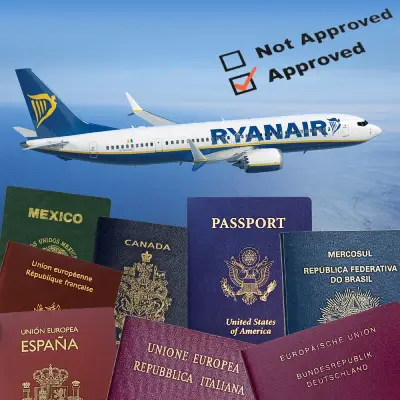
Ryanair is the largest low-cost carrier operating to and from the United Kingdom, with its primary UK hub at London Stansted (STN) and significant operations at Manchester, Birmingham, Edinburgh, Glasgow, and Bristol. Ryanair carries an estimated 55–60 million passengers on UK routes annually, the majority of whom are EU nationals — the exact demographic that became subject to the UK ETA requirement in April 2025.
Ryanair’s highest-volume routes to the UK include: Dublin–Stansted, Kraków–Stansted, Warsaw Modlin–Stansted, Bucharest–Stansted, Wrocław–Stansted, Barcelona–Stansted, and Rome Ciampino–Stansted. Passengers on all of these routes from non-British, non-Irish nationalities now require a UK ETA.
Ryanair’s General Terms and Conditions state explicitly that passengers are “solely responsible for ensuring that you comply with all legal requirements regarding entry to your destination country, including but not limited to visas and electronic travel authorisations.” Ryanair will not refund non-refundable fares where boarding is refused due to missing or invalid travel documentation. This is stated in Clause 9 of Ryanair’s published T&Cs. There are no exceptions and no compensation for denied boarding on this basis — see Section 6 for the legal detail.
Ryanair checks UK ETA status via Timatic at online check-in (available from 2 days to 2.5 hours before departure) and again at the airport check-in desk and boarding gate. The airline has no mechanism to accept a “pending” ETA — only Approved status clears boarding.
easyJet and UK ETA

easyJet operates as the second-largest budget carrier on UK routes, with primary hubs at London Luton (LTN), London Gatwick (LGW), Bristol (BRS), Edinburgh (EDI), and Manchester (MAN). easyJet carries approximately 35–40 million passengers on UK routes annually.
easyJet’s highest-volume European routes to the UK include: Amsterdam–Luton, Paris CDG–Luton, Geneva–Gatwick, Rome Fiumicino–Gatwick, Barcelona–Gatwick, Lisbon–Luton, and Milan Malpensa–Gatwick. Virtually all passengers on these routes from EU and EEA nationalities need a UK ETA since April 2025.
easyJet’s terms mirror Ryanair’s on documentation responsibility. The carrier’s published conditions state that passengers must ensure they hold all documents required for travel to their destination. easyJet’s online check-in system — which opens 30 days before departure — is integrated with Timatic and will block boarding pass issuance for any passenger whose UK ETA is not showing Approved in the UKVI database.
A particular risk with easyJet is the carrier’s early online check-in window. Because easyJet check-in opens up to 30 days before departure, passengers who have applied for their ETA but not yet received approval may believe they have time — only to find the check-in attempt fails, creating unnecessary anxiety about whether the ETA will arrive in time. The solution is to apply for the ETA before attempting check-in, not simultaneously.
British Airways and UK ETA

British Airways operates primarily from London Heathrow (LHR) — the world’s fifth-busiest airport and Europe’s busiest, handling 84.5 million passengers in 2025 according to Heathrow’s official annual statistics published in January 2026. British Airways carries approximately 30 million passengers on UK routes annually, with a significant proportion of those being long-haul travellers from the US, Canada, Australia, Japan, South Korea, India, and the Gulf states.
British Airways’ highest-volume transatlantic routes include: New York JFK–Heathrow, Los Angeles–Heathrow, Toronto–Heathrow, Chicago O’Hare–Heathrow, Miami–Heathrow, and San Francisco–Heathrow. American and Canadian citizens have required a UK ETA since January 2025. Australian, Japanese, and South Korean passport holders likewise.
British Airways uses Timatic through its shared SITA infrastructure and verifies ETA status at online check-in (available from 24 hours before departure for long-haul flights) and at Heathrow check-in desks and departure gates. BA’s codeshare and interline agreements with American Airlines, Iberia, Finnair, and Qatar Airways mean that passengers connecting through Heathrow on partner airlines are subject to the same ETA check at their origin airport.
The cost and disruption of a denied boarding on a transatlantic or long-haul flight — where tickets commonly cost €500 to €2,500 and are non-refundable — makes advance ETA application especially critical. If you are flying British Airways from New York, Los Angeles, Toronto, Sydney, or Tokyo to Heathrow, apply for your UK ETA at least 2 weeks before departure. The standard processing time is 48–72 hours, but there is no reason to cut it close on a high-cost ticket.
Wizz Air and UK ETA
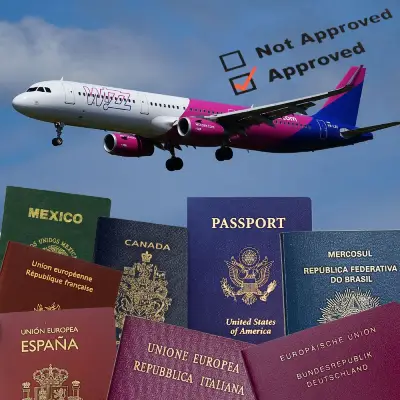
Wizz Air operates an extensive network of routes to the UK from Central and Eastern Europe, with primary UK bases at London Luton (LTN) and London Gatwick (LGW). The carrier serves approximately 15 million passengers on UK routes annually and focuses heavily on markets including Romania, Poland, Bulgaria, Hungary, Ukraine, Albania, Georgia, Moldova, Kosovo, North Macedonia, and Serbia.
These markets represent exactly the passenger profiles most likely to be unfamiliar with the UK ETA requirement — many were travelling to the UK visa-free and without any advance documentation for years before April 2025, and the new requirement represents a significant change to a process they previously completed entirely at the airport.
Wizz Air’s highest-volume routes to the UK include: Bucharest–Luton, Warsaw–Luton, Budapest–Luton, Sofia–Luton, Cluj-Napoca–Luton, Tirana–Luton, and Kutaisi–Luton. Wizz Air checks documentation via Timatic at online check-in and again at the airport. The carrier’s T&Cs follow the same pattern as Ryanair and easyJet: passengers bear full responsibility for their travel documents, and non-refundable fares are not reimbursed for denied boarding caused by missing documentation.
TUI Airways, Jet2 and UK ETA
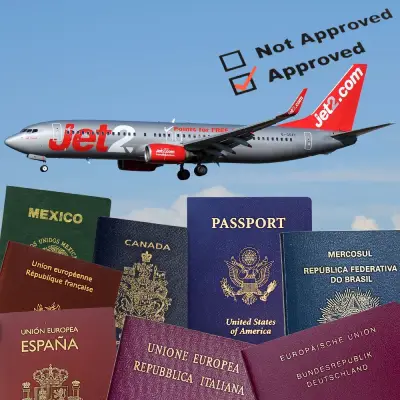
TUI Airways and Jet2 are the UK’s two largest holiday/charter carriers, serving leisure destinations across Europe, the Caribbean, and beyond from airports including Manchester, Birmingham, London Gatwick, Leeds Bradford, Newcastle, and Edinburgh. Together they carry approximately 16–18 million passengers on UK-origin routes annually.
A significant proportion of TUI and Jet2 passengers are European tourists travelling to the UK for specific events or holidays — exactly the demographic introduced to the ETA requirement in April 2025. Passengers flying from Belgium, the Netherlands, Germany, France, Spain, Italy, Portugal, and Scandinavia to UK airports on TUI or Jet2 charter and scheduled services all require a UK ETA if they are non-British, non-Irish nationals of an eligible country.
US and Canadian carriers: Delta, United, American, Air Canada, WestJet

Delta Air Lines, United Airlines, American Airlines, Air Canada, and WestJet collectively operate dozens of daily widebody flights between North America and the United Kingdom, primarily routing through London Heathrow (LHR) with additional services to Manchester (MAN) and Edinburgh (EDI).
US and Canadian citizens have been required to hold a UK ETA since January 2025 — making this the most mature segment of the ETA requirement for non-European travellers. Despite nearly 18 months having passed, US and Canadian travel agents and airlines continue to issue pre-flight warnings about the ETA requirement, reflecting ongoing low awareness among leisure travellers booking independently.
American carriers apply exactly the same Timatic-based verification as European low-cost carriers. Delta’s online check-in system, United’s app, and Air Canada’s web check-in all query UKVI status for UK-bound flights. The financial stakes for transatlantic tickets — commonly US$800–US$3,000 for a return fare — make a missed check-in due to a missing ETA particularly costly.
Norwegian and Scandinavian airlines
Norwegian Air Shuttle and SAS (Scandinavian Airlines) operate significant route networks between the UK and Scandinavia, primarily from London Gatwick (LGW), London Heathrow (LHR), and Edinburgh (EDI). Norwegian’s routes connect Gatwick with Oslo, Stockholm, Bergen, and Copenhagen. SAS routes connect Heathrow and Manchester with Oslo, Stockholm, and Copenhagen.
Scandinavian nationals (Norwegian, Swedish, Danish, Finnish, Icelandic) have required a UK ETA since April 2025 and the requirement is now embedded in Norwegian’s and SAS’s online check-in flows.
Middle Eastern carriers: Emirates, Qatar Airways, Etihad
Emirates, Qatar Airways, and Etihad Airways operate multiple daily services to London Heathrow (LHR) and together serve as the primary connectors between the UK and Asia, South Asia, Africa, and the Middle East. These carriers carry a high proportion of transit and connecting passengers, many of whom originate from countries whose nationals require a UK ETA — including Gulf state nationals (ETA required since November 2023), plus connecting passengers from the Indian subcontinent, Southeast Asia, and Africa whose onward destinations require UK transit.
Transit passengers connecting through UK airports on Middle Eastern carriers need to understand the transit ETA rules carefully — see Section 7.
Don’t Risk Denied Boarding — Apply for Your UK ETA Now
Under 10 minutes to complete. Expert review of every photo and passport before submission. Approved within hours in most cases. Valid 2 years, unlimited trips, up to 6 months per visit. No airline accepts a pending ETA — only Approved clears you to board.
3. UK Airports: What to Expect on Arrival
Your UK ETA is checked twice: first by the airline at your departure airport before you board, and second by UK Border Force on arrival in the United Kingdom. The airport you arrive at does not change the ETA requirement, but it does affect the arrival experience and the likely border control process you will encounter.
London Heathrow (LHR) — 84.5 million passengers in 2025
Heathrow is the United Kingdom’s primary international hub and the busiest airport in Europe. London Heathrow Airport achieved a new record for annual traffic in 2025, catering for 84.5 million passengers. The airport recorded its busiest day ever on 1 August 2025, when passenger numbers surpassed 270,000, and over 97% of passengers waited less than five minutes for security during peak periods.
Heathrow operates four terminals: Terminal 2 (Star Alliance and partner airlines), Terminal 3 (Oneworld partners excluding BA, plus other carriers), Terminal 4 (various carriers), and Terminal 5 (British Airways exclusively). All terminals use the same e-Gate and Border Force systems.
UK Border Force operates a network of automated e-Gates at Heathrow for eligible passport holders from UK, EU, EEA, and selected other nationalities. When you pass through an e-Gate, your passport is scanned and your ETA status is verified automatically — exactly as the airline did at departure. An approved ETA will not trigger any additional checks. An absent or refused ETA will flag an alert and direct you to a manual Border Force examination.
With over 84 million passengers per year passing through four terminals, Heathrow’s Border Force processes millions of arrivals monthly. The e-Gate infrastructure is designed to handle the volume efficiently — but it also means there is no discretion or manual override available at scale. If your ETA is not showing Approved when your passport is scanned, the system flags it and the officer has no choice but to refer you for secondary examination.
London Gatwick (LGW) — ~47 million passengers in 2025
London Gatwick is the UK’s second-busiest airport and operates two terminals: the South Terminal (used by easyJet, Norwegian, and others) and the North Terminal (used by British Airways, TUI, Vueling, and others). Gatwick handles significant inbound traffic from Europe — particularly from France, Spain, Italy, Portugal, the Netherlands, and Scandinavia — all of which are now ETA-eligible nationalities.
Border Force processes at Gatwick include e-Gates for eligible passengers and manual channels for those not e-Gate eligible or flagged by the system. Transit passengers at Gatwick should be aware that Gatwick does not operate the same transit zone arrangements as Heathrow — most transit passengers must clear UK border control regardless of their onward destination.
London Stansted (STN) — ~29 million passengers in 2025
Stansted is Ryanair’s primary UK hub and handles a disproportionately high volume of short-haul European traffic — the exact demographic most heavily affected by the April 2025 ETA introduction. Stansted’s single terminal design means quicker processing than multi-terminal airports, but also means all arriving passengers pass through the same Border Force hall.
Stansted’s passenger profile — primarily budget leisure travellers from Poland, Romania, Italy, Spain, Portugal, and other EU countries — represents perhaps the highest concentration of ETA-eligible nationals at any single UK airport. Border Force at Stansted has seen increased secondary referrals since the April 2025 enforcement date for European nationals, the majority of which relate to documentation issues including ETA.
London Luton (LTN) — ~16 million passengers in 2025
Luton is the primary UK hub for both easyJet and Wizz Air, giving it a passenger profile heavily weighted towards Central and Eastern European nationals — Romanians, Poles, Bulgarians, Hungarians, and Ukrainians — who have been subject to the ETA requirement since April 2025 (EU/EEA nationals) or earlier (for Ukraine and other non-EU countries). Luton is a relatively compact airport, and Border Force at Luton operates with fewer staff than the larger London airports, meaning secondary examination queues can extend significantly during peak periods.
Manchester (MAN) — ~31 million passengers in 2025
Manchester is the UK’s largest airport outside London and the primary international gateway for the North of England. Manchester handles significant transatlantic traffic — Delta, United, and American all serve MAN–US routes — as well as high-volume European routes operated by Ryanair, easyJet, TUI, and Jet2. The airport operates three terminals and handles US, Canadian, and EU nationals in high volume, all of whom are ETA-eligible.
Edinburgh (EDI), Birmingham (BHX), Bristol (BRS) and other UK airports
Edinburgh is Scotland’s primary international airport, handling approximately 15 million passengers in 2025 and serving as a hub for easyJet, Norwegian, and Ryanair. Birmingham handles approximately 12 million passengers and is a significant base for TUI, Jet2, Ryanair, and easyJet. Bristol handles approximately 10 million passengers and serves as a Ryanair and easyJet hub for the South West of England.
The UK ETA requirement applies uniformly at all UK airports. There is no airport where the requirement is enforced more or less strictly — the airline’s Timatic check at the departure airport is the primary gate, and Border Force’s arrival check is the secondary confirmation. Arriving at a smaller regional airport does not reduce scrutiny.
4. What Actually Happens Without a UK ETA — the Denied Boarding Reality
The consequences of arriving at an airport without a UK ETA unfold in a specific sequence. Understanding exactly what happens — and when — is the most compelling argument for applying well in advance.
Stage 1 — Online check-in blocked
For most airlines, the first sign of a problem is at online check-in. Ryanair, easyJet, British Airways, Wizz Air, and most other carriers query Timatic the moment you enter your passport details. If your UK ETA is not showing Approved in the UKVI database, the system either blocks boarding pass issuance entirely or issues a boarding pass with a “DOCS” flag that requires resolution at the airport check-in desk. You will not receive a clear, printable boarding pass. The system does not tell you which specific document is missing — it simply stops the check-in process.
Stage 2 — Airport check-in desk
If you proceed to the airport without resolving the issue, the check-in agent will see the same DOCS flag in their system. The agent will ask to see your travel documentation. When you are unable to produce an approved UK ETA, the agent will enter the relevant code in the departure control system and issue a NOREC (No Record) or OFFLOADED status. Your checked luggage, if already deposited, will be removed from the aircraft hold. At this point, you are formally denied boarding.
Stage 3 — What happens next at the airport
After denied boarding is confirmed, the following things will not happen: the airline will not call a supervisor who can make an exception. The airline will not hold the flight while you attempt to apply for an ETA on your phone — the process takes under 10 minutes to submit, but approval takes hours to days, and the aircraft is not going to wait. The airline will not offer you an alternative flight or rebooking without charge. The airline will not provide hotel accommodation or meal vouchers. You are not entitled to any of these things when denied boarding is caused by your own documentation.
What will happen: you will be directed to the airline’s customer service desk or pointed to the airline’s website for fare rules. You will need to make your own arrangements to get home from the airport. If you have luggage in the hold — possible if you checked in at the airport desk — retrieval may take several hours.
Stage 4 — If you somehow arrive in the UK without an approved ETA
In rare edge cases — such as an airline system failure, a connecting passenger who transits through a country whose Timatic data was not queried, or certain interline connection scenarios — a passenger may physically arrive in the UK without a valid ETA. In this situation, Border Force officers at the UK arrival airport have full discretion to:
- Refuse entry to the United Kingdom
- Detain the passenger pending examination
- Place the passenger on the next available return flight, at the passenger’s expense
- Issue a formal refusal of entry, which creates an adverse immigration record
A refusal of entry to the UK creates an immigration record that must be declared in future visa and ETA applications to the UK and, depending on the jurisdiction, to other countries as well. The cost and consequences of an in-country refusal are significantly greater than a simple denied boarding at the departure airport.
The UK ETA application takes under 10 minutes to complete. But Home Office processing typically takes several hours, and can take up to 3 working days. There is no “airport ETA” counter, no expedited same-minute approval process, and no way to call the Home Office and ask them to rush a decision. Applying at the airport on the day of your flight is not a back-up plan — it is a gamble that you will almost certainly lose. For genuine same-day situations, the Dedicated Agent plan at application-eta.uk processes most applications in ~12 hours — but you still need time for that window to close before check-in does.
5. The Real Financial Cost of Being Denied Boarding
The financial exposure from a single denied boarding event can be substantial. The following analysis covers the categories of loss a typical traveller faces, based on real cost ranges across popular UK-bound routes and booking types.
| Cost Category | Typical Range | Refundable? |
|---|---|---|
| Original airline ticket (denied boarding) | €50 – €2,500 | No — non-refundable fares are the default for budget carriers; even flex fares on BA/Air Canada have cancellation conditions that exclude passenger-fault denied boarding |
| Replacement same-day flight (walk-up fare) | €200 – €3,500 | Walk-up fares carry no discount; you pay the highest published fare for that route on that day |
| Airport hotel (immediate night) | €80 – €350 | Last-minute airport hotel bookings are at full rack rate; non-refundable pre-paid bookings cannot be cancelled for same-day credit |
| Pre-booked accommodation at UK destination | €100 – €3,000 | Non-refundable hotel bookings, Airbnbs with strict cancellation, or advance-purchase rental deposits are fully lost |
| Pre-booked tours, attractions, events | €30 – €2,000 | Concerts, sporting events, museum advance bookings, sightseeing tours — almost universally non-refundable same-day |
| Airport transfers at UK destination | €20 – €200 | Pre-booked taxi, Heathrow Express passes, rail tickets — largely non-refundable on day of travel |
| Car rental at UK destination | €50 – €500 | Advance booking deposits and prepaid rates are typically forfeited on no-show |
| Travel insurance — documentation failure | €0 covered | Standard policies universally exclude administrative/documentation failure as a claim category |
| TOTAL POTENTIAL LOSS | €530 – €12,050+ | Not recoverable through any standard channel |
The travel insurance question in detail
Travel insurance is the first place most passengers look after a denied boarding event. In almost every case, the policy excludes the claim. Standard travel insurance — including policies marketed as “comprehensive” or “gold” cover — universally classifies failure to hold correct travel documentation as an administrative failure. This is not an unforeseen event that insurance is designed to cover; it is a foreseeable requirement that the insurer explicitly excludes.
Policy exclusion language varies by insurer, but the principle is consistent. Common formulations include: “We do not cover claims arising from failure to obtain or hold the correct documentation for your trip,” and “This policy does not cover costs arising from your failure to comply with passport, visa, or entry requirement obligations.” Some policies add even more explicit language: “An ETA, eTA, or electronic travel authorisation is a travel document for insurance purposes — failure to obtain one is treated as an administrative failure and is not covered.”
The only partial exception to this pattern is a Cancel For Any Reason (CFAR) policy. CFAR is an upgrade available from certain insurers that reimburses typically 50–75% of non-recoverable prepaid trip costs if you cancel for any reason, including failure to obtain documentation. However, CFAR has strict conditions: it must generally be purchased within 10 to 21 days of your initial trip deposit, it requires cancellation at least 48 hours before departure, and it pays less than 100% of losses. For a traveller denied boarding on the day of their flight, even a CFAR policy may not provide meaningful recovery.
A UK ETA via application-eta.uk costs from €69 (Standard, 48–72h) to €169 (Dedicated Agent, ~12h). The minimum realistic financial loss from a single denied boarding event — one non-refundable budget airline ticket plus one night’s accommodation — is approximately €200–€400. The maximum realistic loss on a transatlantic trip with pre-booked hotel, tours, and car rental comfortably exceeds €5,000. The ETA costs 1–3% of the exposure it eliminates.
Don’t Risk Denied Boarding — Apply for Your UK ETA Now
Under 10 minutes to complete. Expert review of every photo and passport before submission. Approved within hours in most cases. Valid 2 years, unlimited trips, up to 6 months per visit. No airline accepts a pending ETA — only Approved clears you to board.
6. EU261, US DOT, Canada APPR — Your Legal Rights and Their Limits
Three major passenger rights regimes are relevant to UK-bound travellers: the EU/UK, the United States, and Canada. All three provide meaningful protections in the right circumstances — but all three have explicit carve-outs that make them inapplicable when denied boarding is caused by inadequate travel documentation.
EU Regulation 261/2004 — what it says and what it does not cover
EU Regulation 261/2004 (which the UK retained as UK261 post-Brexit) is the most widely cited passenger rights framework in the world. It provides for compensation of €250 to €600 per passenger for denied boarding, flight cancellation, and significant delay — but the definition of “denied boarding” is specific and contains a critical exclusion.
Article 2(j) of EU Regulation 261/2004 defines “denied boarding” as “a refusal to carry passengers on a flight, although they have presented themselves for boarding under the conditions laid down in Article 3(2), except where there are reasonable grounds to deny them boarding, such as reasons of health, safety or security, or inadequate travel documentation.”
The phrase “inadequate travel documentation” is the operative exclusion. A missing or refused UK ETA is inadequate travel documentation. The denied boarding is therefore not “denied boarding” within the meaning of EU261 — it is a legitimate refusal by the carrier, which is not subject to any compensation obligation under the Regulation.
The European Commission’s own passenger rights guidance confirms this interpretation: passengers who are denied boarding because they do not hold the correct documents for entry to their destination “are not entitled to compensation under EU Regulation 261/2004.” The same principle applies under UK261 (the retained UK version of the Regulation).
| EU261 Scenario | Compensation? | Reason |
|---|---|---|
| Airline denies boarding due to overbooking | Yes — €250–€600 | Involuntary denial due to airline’s own commercial decision |
| Flight cancelled by airline (non-extraordinary) | Yes — €250–€600 | Airline’s operational failure |
| Flight significantly delayed (3+ hours) | Yes — €250–€600 | Airline’s operational failure |
| Airline denies boarding due to missing UK ETA | No — zero | “Inadequate travel documentation” — Article 2(j) exclusion |
| Airline denies boarding due to expired passport | No — zero | Same exclusion — inadequate documentation |
| Airline denies boarding due to missing visa | No — zero | Same exclusion — inadequate documentation |
US Department of Transportation (DOT) — 14 CFR Part 250
US DOT’s involuntary denied boarding regulations under 14 CFR Part 250 require airlines to compensate passengers who are “bumped” from a flight due to overselling. The compensation scales from 200% of the one-way fare (minimum $775) to 400% of the one-way fare (minimum $1,550) depending on the delay caused.
However, the DOT regulations apply only to involuntary denied boarding caused by the airline’s own overselling. When a passenger is denied boarding because they do not hold required documentation for entry to their destination — including a UK ETA — the DOT regulations do not apply. The DOT’s own guidance states that compensation is not required when “a passenger is denied boarding for failure to comply with the carrier’s contract of carriage or applicable government regulations.” A missing UK ETA falls squarely within this exclusion.
For American citizens flying to the UK on US carriers (Delta, United, American) or on British Airways, this means: no DOT compensation for a UK ETA-related denied boarding. The carrier owes you nothing beyond whatever your specific ticket’s refund conditions provide — which for most non-refundable fares is zero.
Canada Air Passenger Protection Regulations (APPR)
Canada’s Air Passenger Protection Regulations, which came into force in 2019, provide for denied boarding compensation of CAN$900 (flights over 9 hours) down to CAN$400 (shorter flights) for involuntary denied boarding. Like EU261 and the US DOT rules, the APPR compensation regime applies to situations within the airline’s control — specifically, overselling and other airline-side decisions to deny boarding.
The APPR explicitly excludes situations where denied boarding arises from a passenger’s failure to comply with applicable government regulations or the carrier’s terms. A missing UK ETA is a passenger-side documentation failure and falls outside APPR protection. Air Canada and WestJet’s published passenger rights summaries confirm that documentation-related denied boarding does not trigger APPR compensation.
Summary: no passenger rights framework protects you if you fly without a UK ETA
| Passenger Rights Framework | Covers UK ETA denied boarding? | Reason |
|---|---|---|
| EU Regulation 261/2004 / UK261 | No | Article 2(j) — inadequate travel documentation exclusion |
| US DOT 14 CFR Part 250 | No | Applies to overselling only; documentation failure is passenger-side |
| Canada APPR | No | Situations within airline control only; documentation failure excluded |
| Standard travel insurance | No | Administrative failure — universal policy exclusion |
| Cancel For Any Reason (CFAR) insurance | Partial | 50–75% of prepaid costs; strict purchase deadline; not day-of-departure applicable |
7. Transit Passengers: A Different Set of Rules
A common and dangerous assumption is that transit passengers — those connecting through a UK airport on the way to another destination — do not need a UK ETA because they are “not really entering the UK.” This assumption is wrong in most cases and results in denied boarding as effectively as any direct traveller without an ETA.
Do transit passengers need a UK ETA?
In most scenarios, yes. The UK Home Office position is that ETA-eligible nationals transiting through UK airports require a valid UK ETA, even if they do not intend to pass through border control. The key scenarios are:
| Transit Scenario | UK ETA Required? |
|---|---|
| Short airside connection at Heathrow, Gatwick, or Manchester — staying in the international departure lounge, not clearing UK border control | Yes — UK ETA required for eligible nationals in most cases |
| Landside connection — clearing UK border control, collecting luggage, and re-checking in | Yes — UK ETA required; you are entering the UK |
| Overnight connection — staying in a UK airport hotel between flights | Yes — you are entering the UK for the overnight period |
| Nationals of certain countries who qualify for the Direct Airside Transit Visa (DATV) exemption | No ETA — but DATV rules are specific; see Home Office guidance |
| British or Irish nationals connecting through UK airports | No ETA required — exempt regardless of connection type |
The airline at your origin airport will check your documentation for your entire itinerary — including the transit leg through the UK — when you check in for the first flight. If your UK ETA is not approved, you will be denied boarding at your origin, even if your final destination is a country for which you hold all required documentation.
For a complete guide to transit rules by airport, connection type, and nationality — including specific guidance on airside transit, the DATV (Direct Airside Transit Visa), and overnight connections — see our dedicated article: UK ETA for Heathrow Transit and Layover 2026 ➤
Connecting through Heathrow on Middle Eastern and Asian carriers
Heathrow is a primary connecting hub for passengers flying between North America and Asia, the Middle East, Africa, and South Asia on carriers including Emirates, Qatar Airways, Etihad, Singapore Airlines, Cathay Pacific, and Japan Airlines. Many of these connecting passengers originate from countries whose nationals require a UK ETA — including all EU member states, the US, Canada, Australia, Japan, and South Korea.
If your journey includes a connection at Heathrow — for example, flying from New York to Singapore via London Heathrow on British Airways — you need a UK ETA. The check-in agent at New York JFK will verify this before issuing your boarding pass for the transatlantic sector. The fact that your final destination is Singapore and you may spend only 2 hours in Heathrow’s departure lounges does not exempt you from the requirement.
8. How to Apply for Your UK ETA Before Your Flight
Applying for a UK ETA before your flight takes under 10 minutes. The process is fully digital — there is no paper form, no embassy visit, and no postal submission. Here is everything you need to do, timed to your departure date.
Choose your plan based on your departure date
| Your flight is… | Recommended Plan | Processing Time | Total Cost |
|---|---|---|---|
| Today or tomorrow | Dedicated Agent | ~12 hours | €169 |
| In 3–7 days | Priority | ~24 hours | €119 |
| In 7+ days (or not yet booked) | Standard | 48–72 hours | €69 |
All plans include the £20 UK government fee, expert photo and passport review, Home Office submission, and email delivery of your approved ETA. Veterans, students, and under-18s receive 10% off the service fee. Full pricing: UK ETA fees and processing times ➤
Step 1 — Confirm your nationality is eligible
Use the instant search tool on our UK ETA eligible countries page to confirm your nationality requires an ETA. 85 nationalities are covered. British and Irish citizens are exempt. Nationals of countries that require a full UK visa (rather than an ETA) will not find their country on the eligible list and should consult our eligibility guide.
Step 2 — Start your application at application-eta.uk
Go to application-eta.uk/application/, select your plan, and begin. The full application is completed in one session on the same page — you do not need to create an account or return to the site at a later date. Do not close the browser tab mid-application; the form does not auto-save progress.
Step 3 — Enter your passport details exactly as printed
Your full legal name must match your passport’s machine-readable zone (MRZ) exactly, including all middle names. Your passport number must be entered character by character — the letter O and the digit 0 are frequently confused. Every data point entered in the ETA application must match your passport exactly because the airline will check both against the same record when you check in.
Step 4 — Upload your photos
You need two photos: a biometric selfie (plain white background, no glasses, no filters, original file from your camera) and a photo of your passport data page (flat, no glare, all four corners visible). Photo non-compliance is the most common cause of ETA application delays. Our expert team reviews both photos before submission. Full requirements: UK ETA photo requirements ➤
Step 5 — Answer the 8 suitability questions and submit
Eight yes/no questions cover criminal history, previous UK immigration issues, and health grounds. The vast majority of applicants answer No to all eight. Submit and pay — secure payment by card, Google Pay, or Apple Pay. Our team receives your application and begins expert review before forwarding to the Home Office.
Step 6 — Check your ETA status before you head to the airport
Use our UK ETA status check tool 24–48 hours before your flight. Enter your passport number, nationality, expiry date, and date of birth to see your live UKVI status. If Approved, you are ready to fly — your ETA is already linked to your passport and will be read automatically at check-in. If Pending or Under Review close to your departure date, contact us immediately.
Apply from your phone — web or Android app
The full application is available on the mobile-responsive website at application-eta.uk from any smartphone or tablet. Android users can also download the UK ETA Apply app (available on Google Play) for a native app experience with built-in photo validation, 16 language support, and Google Pay integration.
Applying for your whole family
Every traveller — including infants and young children — needs their own individual UK ETA linked to their own passport. You can apply for multiple family members using one email address and payment method, but each must be a separate application. Children under 18 qualify for a 10% discount on the service fee.
If your ETA is refused
UK ETA refusals are uncommon but do occur, typically following Yes answers to suitability questions or previous UK immigration issues. A refusal does not automatically mean you cannot travel — it means the Home Office determined you do not meet the ETA criteria and that a more detailed visa application may be required. Contact our team immediately following a refusal for guidance on next steps.
Don’t Risk Denied Boarding — Apply for Your UK ETA Now
Under 10 minutes to complete. Expert review of every photo and passport before submission. Approved within hours in most cases. Valid 2 years, unlimited trips, up to 6 months per visit. No airline accepts a pending ETA — only Approved clears you to board.
9. Frequently Asked Questions — UK ETA for Flights
Do I need a UK ETA if I fly with Ryanair, easyJet or British Airways?
Yes, if your nationality is on the UK ETA eligible list. The requirement applies to the traveller, not the airline — it makes no difference whether you fly with Ryanair, easyJet, British Airways, Wizz Air, TUI, Jet2, Norwegian, Delta, United, Air Canada, or any other carrier. All 85 eligible nationalities must hold a valid UK ETA before check-in opens, on every flight to the UK from every departure country. Check your nationality: UK ETA eligible countries ➤
Does the airline check my UK ETA at check-in or at the gate?
Airlines check UK ETA status through the SITA/IATA Timatic database at online check-in — before you even get to the airport. If online check-in is blocked, the same check repeats at the airport check-in desk and again at the departure gate. The Timatic system gives the agent a mandatory instruction; they have no authority to override it. Only an Approved status clears you to board.
Will Ryanair refund my ticket if I am denied boarding because I have no UK ETA?
No. Ryanair’s General Terms and Conditions explicitly state that passengers are responsible for ensuring they hold all required travel documents, and that non-refundable tickets are not reimbursed if boarding is refused for documentation reasons. easyJet, Wizz Air, TUI, Jet2 and all major carriers apply the same policy. There is no exception and no compensation — the responsibility lies entirely with the passenger.
Am I entitled to EU261 compensation if I am denied boarding for a missing UK ETA?
No. EU Regulation 261/2004 Article 2(j) defines denied boarding with an explicit exclusion for refusals based on “inadequate travel documentation.” A missing UK ETA is inadequate travel documentation. The airline owes you no compensation, no meal vouchers, no hotel, and no alternative flight under EU261. The European Commission’s own guidance confirms this: if you do not hold the required documents for entry to your destination, you are not entitled to EU261 compensation.
Will travel insurance pay out if I am denied boarding for not having a UK ETA?
Almost certainly not. Standard travel insurance policies classify failure to hold correct travel documentation as an administrative failure — an explicit exclusion from coverage. It is not treated as an unforeseen event. The only partial exception is a Cancel For Any Reason (CFAR) policy, which reimburses 50–75% of non-recoverable costs but must be purchased 10–21 days before travel and requires cancellation before departure day.
Do I need a UK ETA if I am just connecting through Heathrow or another UK airport?
In most cases, yes. Transit passengers connecting through UK airports, including airside transit where you do not pass through UK border control, generally require a valid UK ETA if their nationality is on the eligible list. Full details for all transit scenarios are in our dedicated guide: UK ETA for Heathrow Transit and Layover 2026 ➤
I have a Schengen visa — do I still need a UK ETA?
Yes. The UK is not part of the Schengen Area and operates an entirely separate immigration system. A Schengen visa — including a valid multiple-entry Schengen visa — gives you no right to enter the UK and does not substitute for a UK ETA. This applies to travellers flying from any Schengen country to any UK airport.
I have flown to the UK many times before — do I still need an ETA now?
Yes. The UK ETA requirement was introduced progressively: November 2023 for Gulf nationals, January 2025 for most non-European eligible nationalities (including US and Canadian citizens), and April 2025 for all EU and EEA nationals. If your previous visits were before these dates, your travel history is irrelevant — you now need a UK ETA for every trip, regardless of how many times you have visited before.
How long before my flight should I apply for a UK ETA?
As early as possible — at minimum 72 hours before your flight. Most applications are approved within a few hours, but the official Home Office maximum is 3 working days. Applying close to departure risks still being in processing when check-in opens. For flights within 48 hours, use the Dedicated Agent plan (~12h processing). Apply at: application-eta.uk/application/ ➤
Can I apply for a UK ETA at the airport on the day of my flight?
You can technically apply at any time, but applying at the airport on departure day is extremely risky. Airlines verify ETA status when check-in opens — typically 2 to 6 hours before departure. If your ETA is still pending when check-in closes, you will be denied boarding regardless of when you applied. There is no airport counter where you can obtain a UK ETA in person, and no mechanism to expedite Home Office processing on the day.
My UK ETA application is still pending — can I still board my flight?
No. A pending ETA is not sufficient for boarding. You must have an Approved status before the airline will permit check-in. If your application is pending close to your departure, contact the Dedicated Agent support team at application-eta.uk immediately for urgent handling.
Does my child need their own UK ETA for a flight to the UK?
Yes. Every individual traveller, including infants and children, needs their own UK ETA linked to their own passport. A parent or guardian can complete the application on behalf of a child. Children under 18 qualify for a 10% discount on the service fee — select the minor option at checkout at application-eta.uk.
I have EU Settled Status — do I need a UK ETA to fly back to the UK?
If you are travelling on a foreign (non-British, non-Irish) passport, you generally need a UK ETA even if you hold EU Settled or Pre-Settled Status, unless you are also carrying a valid Biometric Residence Permit (BRP) or eVisa. The airline checks ETA status at the departure airport — your Settled Status is verified separately by Border Force on arrival. Both checks are independent.
What is the difference between a UK ETA and a UK visa when flying to the UK?
A UK ETA is for visa-exempt nationals — a simple electronic pre-clearance applied for online in under 10 minutes, valid for 2 years with unlimited entries, costing £20 government fee plus a service fee from €69. A UK visa is for nationals of countries not on the visa-exempt list — it requires a formal application, often with a biometric appointment at a visa application centre, costs significantly more, and takes weeks. If your nationality is on the ETA eligible list, you need an ETA, not a visa.
What happens if I arrive at a UK airport without a UK ETA?
In most cases you will not reach a UK airport — the airline will have denied you boarding at your departure airport. If you somehow arrive in the UK without a valid ETA, you will face detailed examination by Border Force and may be refused entry, detained, or placed on the next available return flight at your own expense. A refusal of entry creates an adverse immigration record that must be declared in future applications.
Expert review: Martin Cage, Senior UK ETA Specialist, Home Office Immigration Advisory Panel. Published June 2026. · Sources: Heathrow Airport Media Centre — Annual Traffic Statistics 2025, published January 2026 (84.5 million passengers; 270,000 busiest day 1 August 2025; 97.3% security waits under 5 minutes) · Heathrow Airport Holdings — Annual Results 2025, published February 2026 · UK Civil Aviation Authority (CAA) — Annual Airport Data 2025, published March 2026 · UK Home Office — Electronic Travel Authorisation guidance, GOV.UK (updated February 2026) · UK Home Office Immigration System Statistics, Year Ending December 2025 (published February 2026) · Immigration and Asylum Act 1999, Schedule 7 — carrier liability provisions (carrier fines up to £10,000 per passenger) · Immigration and Nationality (Fees) Amendment Order 2026 (ETA government fee increase to £20, 9 April 2026) · EU Regulation 261/2004 of the European Parliament and of the Council, Article 2(j) and Article 15 — denied boarding definition and compensation exclusion for inadequate travel documentation · European Commission — Air Passenger Rights guidance, ec.europa.eu/transport · Ryanair General Terms and Conditions — Clause 9 (passenger documentation responsibility), published ryanair.com · US Department of Transportation — 14 CFR Part 250 (Denied Boarding Compensation) — application limited to overselling; documentation exclusion confirmed in DOT guidance · Canada Air Passenger Protection Regulations (APPR), SOR/2019-150 — compensation applicable to situations within carrier control; documentation failure exclusion · IATA Timatic database — travel information management system used by global carriers for passenger documentation verification.
More UK ETA Guides